We live in a world where almost everything we eat is sweetened — not just desserts, but bread, sauces, drinks, and even “healthy” snacks. Sugar hides everywhere, comforting us in the short term but quietly draining our vitality.
We crave it because it gives a quick burst of pleasure, yet that same sweetness slowly robs the body of balance, clarity, and long-lasting energy.
The truth is, too much sugar doesn’t just affect our waistline — it disrupts our entire system, from the way we think to how we age. Learning to thrive on less sugar isn’t about deprivation; it’s about liberation — reclaiming control over your energy, emotions, and peace of mind.
⚙️ The Hidden Cost: What Sugar Does to Your Metabolism
Sugar isn’t just a calorie — it’s a chemical signal.
Every spoonful sends a message to your body: “Store more fat, burn less energy.”
When you eat sugar, your blood glucose spikes. The pancreas releases insulin, a hormone designed to move that sugar into your cells for fuel. But when sugar becomes a daily flood — from sweet drinks, snacks, or processed foods — your cells stop listening.
This condition, called insulin resistance, makes your body work harder while producing more insulin. Eventually, your energy crashes, your cravings rise, and your body begins to store fat instead of burning it.
Over time, this leads to:
- Fatigue and mood swings
- Brain fog and poor focus
- Inflammation and faster aging
- Weight gain around the midsection
- Higher risk of diabetes, fatty liver, and heart disease
Sugar becomes not just a food, but a metabolic stressor — one that slowly steals the body’s ability to self-regulate.
🧠 The Mind-Sugar Connection
Sugar doesn’t only affect your body — it rewires your brain.
It triggers dopamine, the “feel-good” chemical, in the same way addictive substances do.
That’s why a donut or soda feels emotionally comforting: it gives a short-term rush of pleasure followed by an inevitable crash.
But what’s worse is the emotional dependency it creates.
The more sugar you eat, the more you need to feel “normal.”
It turns food into a coping mechanism — and the body into a battleground.
When you reduce sugar, you begin to stabilize your emotions.
You’ll notice fewer highs and lows, less anxiety, and a deeper sense of calm.
Peace of mind often starts not in your thoughts, but in your blood sugar.
🌿 Step 1: Identify the Hidden Sugars
Even foods labeled “healthy” or “low-fat” often hide sugar under new names.
Watch for these terms:
- Sucrose
- Fructose syrup or corn syrup
- Maltose, dextrose, glucose
- Evaporated cane juice
- Agave nectar or brown rice syrup
If it ends in -ose or sounds fancy, it’s likely sugar wearing a disguise.
The less processed, the better.
🥗 Step 2: Replace, Don’t Restrict
The goal isn’t punishment; it’s replacement. You can still enjoy sweetness — just in its natural, balanced form.
Healthier swaps:
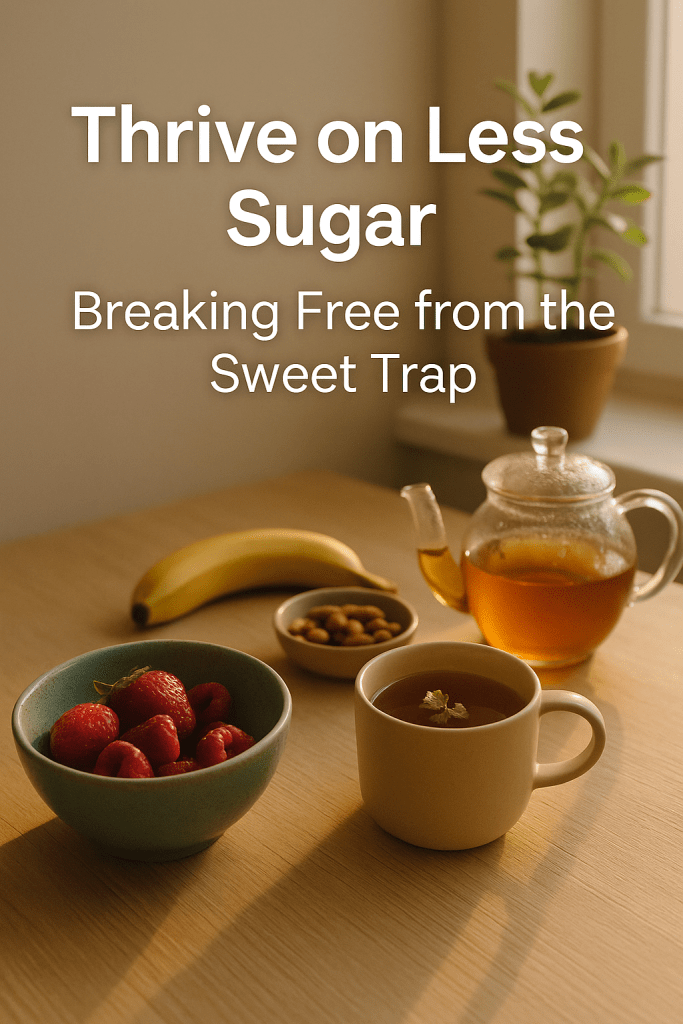
- 🍓 Fresh fruit instead of juice — fiber slows the sugar spike.
- 🍯 Raw honey or dates in moderation for natural sweetness.
- 🥜 Nuts and seeds for steady energy.
- 🍠 Sweet potatoes instead of pastries — natural sugar with nutrients.
- ☕ Cinnamon or vanilla in your coffee instead of sugar.
🕒 Step 3: Balance Your Meals to Balance Your Blood Sugar
Each meal should include:
- Protein (eggs, lentils, fish, tofu) — keeps you full longer.
- Healthy fats (olive oil, nuts, avocado) — slow digestion and reduce cravings.
- Fiber (vegetables, beans, oats) — stabilizes glucose.
When your meals are balanced, your cravings fade naturally. You stop needing sugar to feel alive — you start living with real energy.
🧘 Step 4: Move Daily — Even Lightly
Movement is one of the best natural “sugar regulators.”
Even a 10-minute walk after meals helps muscles absorb glucose without needing as much insulin.
You don’t need to overtrain — just move with purpose:
- Walk after lunch or dinner.
- Stretch before bed.
- Breathe deeply when you crave sweets — sometimes, your body just needs oxygen, not sugar.
🙏 Spiritual Reflection: Feeding the Soul, Not the Craving
When life feels heavy, we often reach for sweetness to fill a deeper emptiness.
But that craving is often spiritual — a longing for peace, comfort, or love.
True satisfaction comes not from what’s on your plate, but from what’s in your heart.
“Taste and see that the Lord is good.” — Psalm 34:8
Feed your soul with prayer, gratitude, and kindness.
The less you depend on external sweetness, the more you taste the sweetness of life itself.
🌞 Closing Thought
The goal isn’t to live sugar-free — it’s to live free from sugar’s control.
When you thrive on less sugar, you gain:
- Steady energy
- Clearer thinking
- Better sleep
- Balanced emotions
- A deeper sense of peace
Life is already sweet when you slow down enough to taste it.
“Whether you eat or drink, do all to the glory of God.” — 1 Corinthians 10:31
So take it slow. Savor the natural. Choose peace over cravings.
And learn once again to Thrive on Less — not by denying yourself pleasure, but by rediscovering where true joy lives.


Leave a Reply