In today’s rapidly evolving society, many of us find ourselves surrounded by growing uncertainty—especially when it comes to identity, roles, and the deeper purpose of our humanity. From new conversations around gender and inclusion to shifting family dynamics and cultural movements, the noise can feel overwhelming. The result? A widespread sense of confusion—about who we are, what we’re meant to do, and how to live in harmony with one another.
But how did we get here?
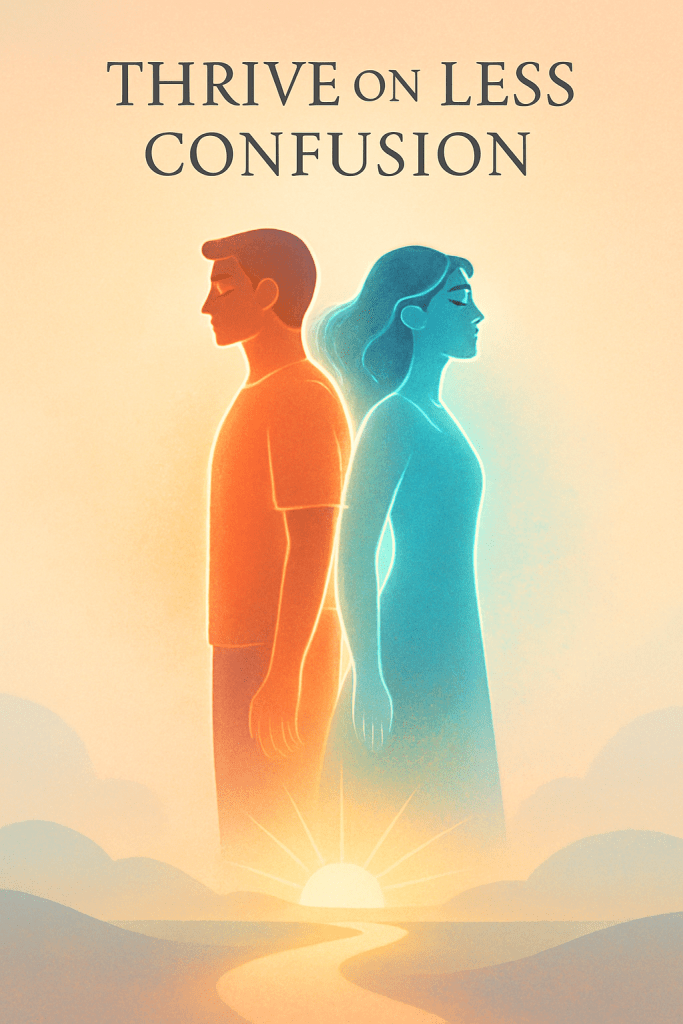
One of the greatest challenges in our time is not necessarily change itself—but the loss of clarity. As we push forward into discussions around equality and inclusion, we sometimes lose sight of what makes us beautifully different and complementary. Men and women, for instance, are equal in value, yet they are not the same. Our biological differences are not weaknesses but strengths designed for collaboration, not competition.
Let’s consider a simple analogy. A shovel, a rake, and a pickaxe are all tools—each uniquely designed for a specific purpose. Try to dig a hole with a rake, or break rocks with it—it simply won’t work. Just as tools are crafted for different roles, men and women are uniquely gifted with different strengths, and society functions best when we respect, honor, and work with those differences instead of erasing them.
Unfortunately, fear and misunderstanding often lead to a breakdown in this balance. Movements that begin with good intentions—like fighting for justice or equality—can sometimes swing too far, inadvertently overshadowing the foundational value of cooperation. When fear leads us to reject or diminish others, we deepen the divide rather than building bridges.
In this climate of confusion, we’re witnessing a surge in mental health challenges, identity crises, and social division. The push for inclusion is vital—but without clear purpose and understanding, it can unintentionally lead to disorientation. Many have forgotten who they are, and as a result, they forget why they matter.
So, how do we begin to thrive in a world clouded by confusion?
We start by simplifying. We thrive on less confusion—not by rejecting the complexities of modern life but by returning to timeless truths. We acknowledge our differences without diminishing each other. We encourage open conversations instead of silencing others. We teach the next generation not just to be proud of who they are, but also to respect and work alongside those who are different.
Thriving on less confusion means embracing truth, humility, and purpose. It’s about raising families where both parents contribute emotionally and physically. It’s about building communities where identity is honored, not politicized. It’s about redefining strength—not as dominance, but as mutual respect and collaboration.
In the end, humanity thrives when we choose clarity over chaos, purpose over pressure, and cooperation over competition.
Let’s return to the basics—and thrive on less confusion.


 Thrive on Less
Leave a reply to Theresa Cancel reply