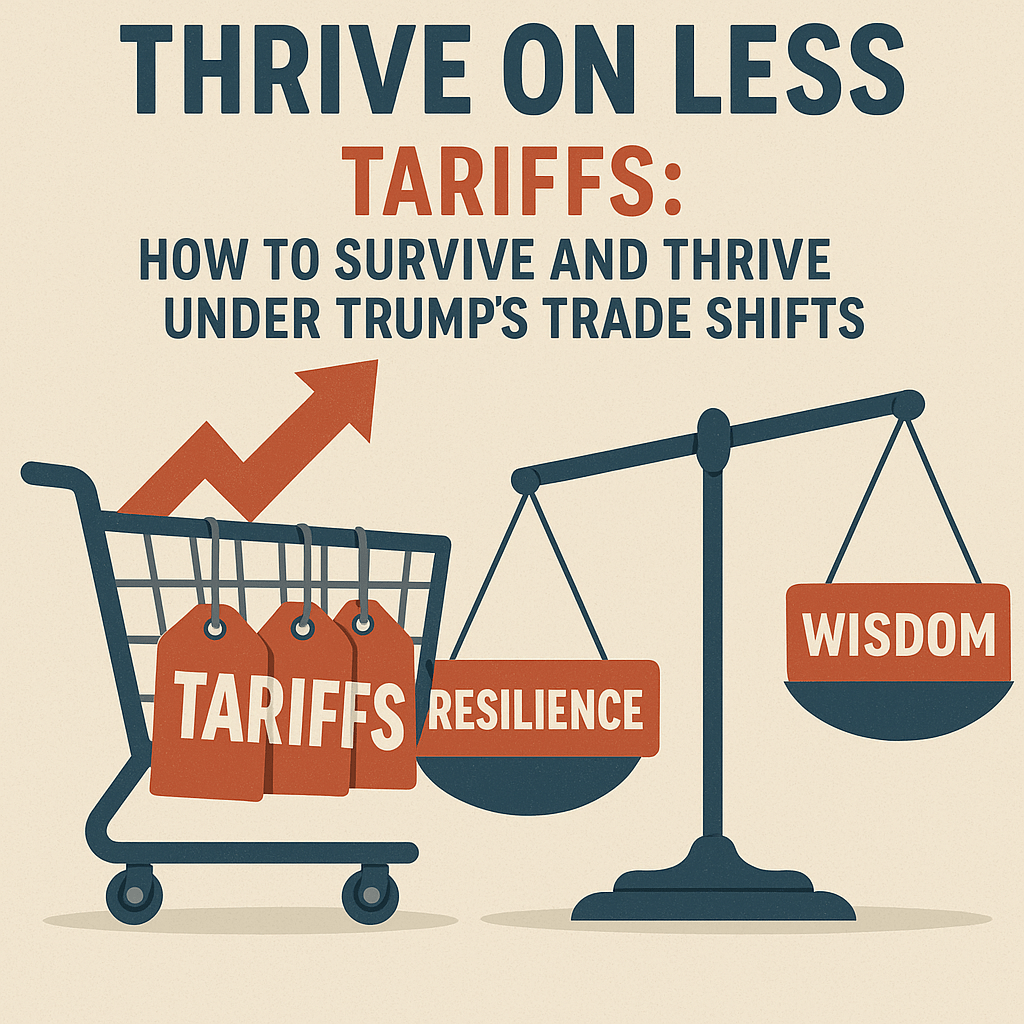
Tariffs aren’t new, but the latest Trump-era tariffs are shaking up the playing field in ways that hit both businesses and households. Lumber, cabinets, furniture, EVs, batteries, and steel are facing steep duty hikes—10% to 100% depending on category. For many, this feels like another burden. But for those willing to adapt, it can become an opportunity to re-think, re-source, and even thrive.
Understanding the Shock
- Wood products & furniture: 10–25% tariffs in effect, with possible step-ups in 2026.
- China-related goods: 25–100% duties on EVs, batteries, solar, steel, and more.
- “Reciprocal tariffs” model: a new approach where the U.S. matches tariffs imposed by trading partners.
This isn’t just policy—it’s a cost shock that directly affects what shows up in stores, how much you pay, and where goods come from.
Surviving the Tariffs
1. Know Your Costs
Families and small businesses alike need to understand where the money leaks. For a business, that means tracking tariffs in your supply chain; for a household, it means knowing which goods will get more expensive so you can plan ahead.
2. Embrace Alternatives
- For home goods: Buy locally made or refurbished furniture instead of imports.
- For energy/EV buyers: Look at models or components sourced outside China to avoid the steepest costs.
- For DIY projects: Use domestic wood alternatives where possible to dodge the lumber hikes.
3. Smarter Consumption
Tariffs often make us rethink what’s essential. This is a moment to buy less but better, repair instead of replace, and avoid being manipulated into “panic purchases.”
Thriving Through Tariffs
For Small Businesses
- Tariff engineering: Slight design changes (materials, assembly location) can shift goods into a lower tariff category.
- Reshoring & near-shoring: Partner with U.S., Mexico, or Canada suppliers where duties are lighter.
- Transparency with customers: Show them exactly how tariffs affect price—this builds trust and loyalty.
For Families
- Budget resilience: Factor higher costs into your food, energy, and household budgets now to avoid surprises.
- Local advantage: Tariffs make local farms, local workshops, and small U.S. producers more competitive. Supporting them often means better quality and stronger community ties.
- Skills over stuff: Invest in knowledge (cooking from scratch, basic repairs) instead of products that get caught in tariff wars.
Less Delusion, More Reality
Tariffs expose the fragility of overconsumption. If our lives depend on the cheapest imports, every political change shakes us. But if we build resilience—local supply, strong skills, mindful spending—then tariffs become less a crisis and more a filter that forces us back to essentials.
“The wise store up choice food and olive oil, but fools gulp theirs down.” (Proverbs 21:20)
Living wisely means preparing for costs to rise and refusing to be trapped by systems we cannot control.
Closing Prayer
Lord,
Teach us to live wisely in uncertain times. Help us not to panic when costs rise or markets shake, but to trust in You and use our resources with discernment. Show us how to build resilience in our families, honesty in our businesses, and faith that no tariff, no government, no system can take away. For You provide all that we need.
Amen.
 Thrive on Less
Leave a comment