The Illusion of Equality
We live in a society that loudly proclaims equality: equal rights, equal opportunities, equal voices. Yet, when the dinner bill arrives, many people quietly return to the old script — the man pays. Why does this expectation survive in a world where women work, earn, and succeed just as much as men?
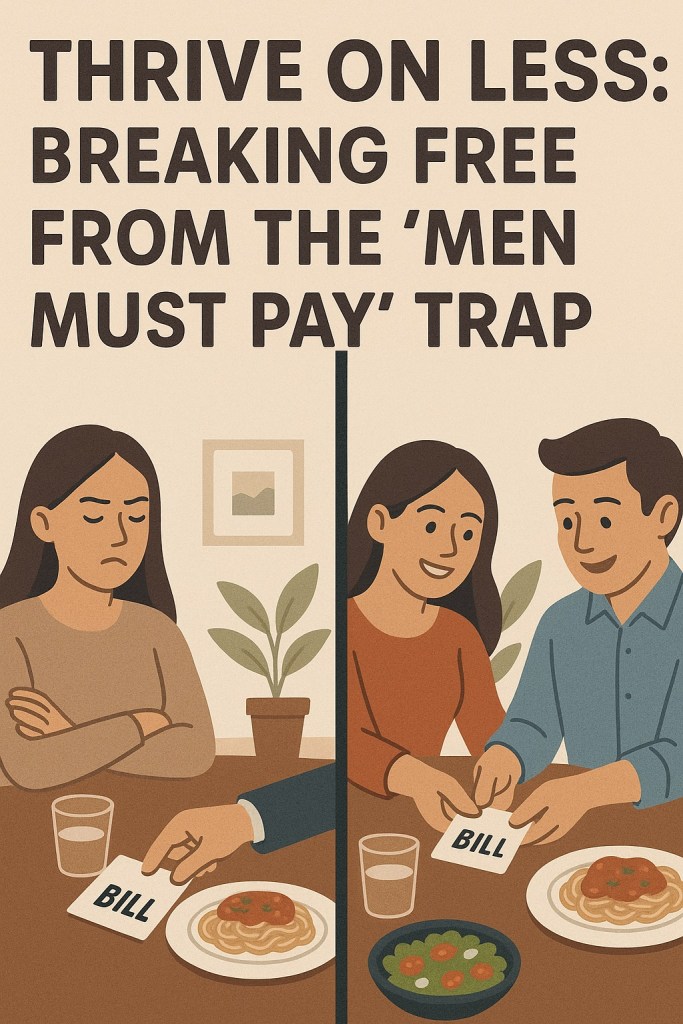
The truth is uncomfortable: while equality is preached, some deliberately cling to old roles when it benefits them. The idea that “men are supposed to pay” has been kept alive not out of necessity, but often out of convenience — and sometimes out of manipulation.
The Psychology of the Provider Role
For centuries, men were the sole providers. That history still casts a shadow. For some women, letting a man pay isn’t just about saving money — it’s about testing his ability to provide, his seriousness, or even his willingness to be controlled by tradition.
This creates a double standard. In the workplace, equality is demanded. But in relationships, the old game resurfaces: the man proves his worth with his wallet, while the woman reserves the right to decide whether he passes the test.
Manipulation Hidden as Tradition
When someone insists, “It’s just tradition,” what they sometimes mean is:
- I want the benefits of equality (freedom, rights, income) but not the responsibilities (financial contribution in dating).
- I want power without cost — the ability to reject or judge a man if he doesn’t pay, while claiming independence when it suits me.
This isn’t equality. It’s selective empowerment.
How Men Fight Back Fairly
Breaking this pattern doesn’t mean becoming bitter or hostile. It means reclaiming fairness and balance. Men can fight back the idea by:
- Setting Expectations Early
Talk openly: “I believe in equality. I’m fine paying sometimes, but I’d like us to share costs.” A healthy relationship won’t crumble over fairness. - Alternating Responsibility
One date, he pays. Next date, she pays. That reflects partnership, not tradition. - Going Dutch
Splitting the bill is the simplest way to defuse power games. If equality is the goal, then equality should show up in practice. - Walking Away from Double Standards
If someone insists you must pay because of your gender, recognize that as a red flag. Equality cannot exist where old rules are used as leverage.
Thrive on Less: Free from False Obligations
To thrive on less means to thrive with less debt to tradition, less burden of unfair expectations, and less manipulation disguised as romance. True partnership doesn’t rely on one side carrying the load while the other reaps the benefits.
If we want equality, we must live it consistently — not only in the workplace or politics but at the dinner table, too. Anything less isn’t equality; it’s a power game.
🙏 Reflection:
The Gospel teaches us, “The worker deserves his wages” (Luke 10:7). That applies to both men and women. If both are workers, then both are contributors. God designed relationships on love and mutual respect — not on manipulation or exploitation.
 Thrive on Less
Leave a comment