Grief is one of life’s greatest tests. When someone passes away, our first response is often sadness—not only because they are gone, but because we will miss their presence in our lives. That sadness is natural. But too often, bereavement reveals our selfishness. We argue over wills, we complain about what was or wasn’t done, we fight over what cannot be changed. Instead of focusing on love, we waste precious time in strife.
Yet, the second commandment of God is clear: “Love your neighbor as yourself.” (Mark 12:31). Death reminds us that love should be the foundation of every relationship—not resentment, not pride, not competition.
Death as Release, Not Defeat
When a person passes away, it marks the end of their earthly struggles—whether physical pain, emotional burdens, or unseen battles of the soul. Instead of seeing death only as tragedy, we can choose to view it as release.
The Bible reassures us: “He will wipe every tear from their eyes. There will be no more death or mourning or crying or pain, for the old order of things has passed away.” (Revelation 21:4).
For those who trust in Him, death is not the end but a passage. “I am the resurrection and the life. The one who believes in me will live, even though they die.” (John 11:25).
This is why, in faith, we can rejoice. Death is the final test before meeting our Creator. The body rests, but the soul moves on to what was prepared from the beginning of time.
The Deeper Lesson of Loss
For those who believe life ends in nothingness, grief can feel unbearable. But pause and reflect: everything in this world carries meaning and order. The seasons, the cycles of life, the balance of nature—nothing exists without purpose.
We may not fully comprehend it, but one truth remains: at the end of all things, death smiles at us, and the only response we can give is to smile back.
As Ecclesiastes reminds us: “There is a time for everything, and a season for every activity under the heavens: a time to be born and a time to die.” (Ecclesiastes 3:1–2).
What Truly Matters
We should not despair that someone has died. Instead, we should be most concerned about whether they lived in order with God. Did they walk in love? Did they reconcile with their Creator? Because once the door of life is shut, it remains shut for eternity.
“And just as it is appointed for man to die once, and after that comes judgment.” (Hebrews 9:27).
That is why bereavement should not only bring sorrow but also self-reflection. Are our lives in order? Are we reconciled with God, or are we still wasting time on arguments, grudges, and bitterness?
Living With Less—Even in Grief
To thrive on less bereavement means stripping away the noise of selfishness in loss. It means less fighting, less complaining, less regret—and more love, more reflection, more readiness for eternity.
We do not control when death will come, but we can control how we live before it does. Love generously. Forgive quickly. Keep your soul in order.
Because at the end of it all, God is the God of the living—not the dead (Matthew 22:32). And Jesus comforts us: “Blessed are those who mourn, for they shall be comforted.” (Matthew 5:4).
✨ Final thought: Rejoice for those who have finished their race in Christ, and be sober for those who did not. Use every moment wisely, because eternity is real, and the door once shut will not reopen.
A Prayer for Comfort in Bereavement
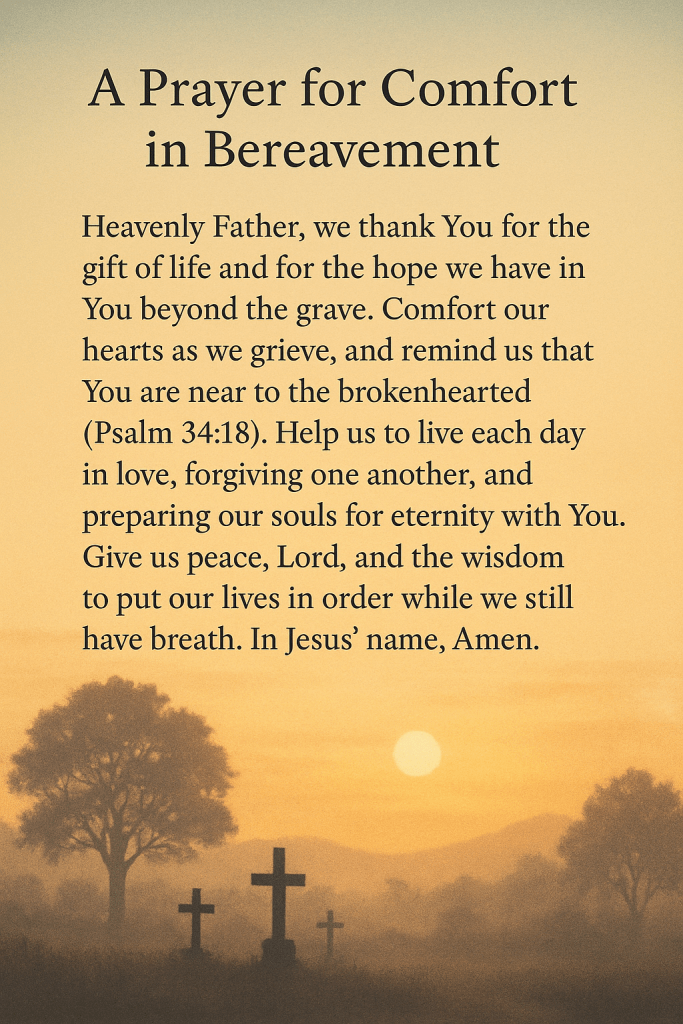
Heavenly Father, we thank You for the gift of life and for the hope we have in You beyond the grave. Comfort our hearts as we grieve, and remind us that You are near to the brokenhearted (Psalm 34:18). Help us to live each day in love, forgiving one another, and preparing our souls for eternity with You. Give us peace, Lord, and the wisdom to put our lives in order while we still have breath. In Jesus’ name, Amen.
 Thrive on Less
Leave a comment