Breaking Free from the “Happy Wife, Happy Life” Deception
In a culture overrun by consumerism and instant gratification, love has become less about connection and commitment—and more about contracts and conditions. We live in a world where affection is increasingly transactional. Where love is bartered like a commodity, and genuine relationships are sacrificed at the altar of ego, entitlement, and image.
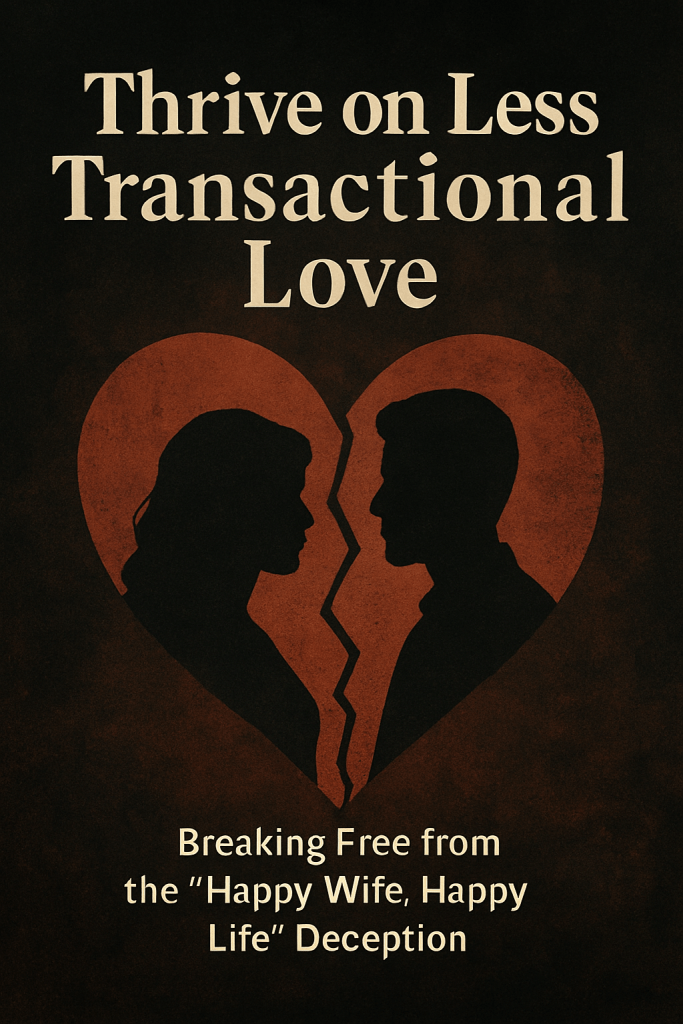
This mindset has deeply damaged the foundation of relationships, especially in the West. One of the most dangerous slogans that has spread across American households for generations is the phrase: “Happy wife, happy life.” On the surface, it may sound like a sweet gesture of peace. But dig deeper, and you’ll find it’s a toxic pattern that has emasculated men, elevated emotional manipulation, and destroyed balance in marriages.
The Rise of Self-Serving “Love”
Modern culture often praises independence, self-love, and self-prioritization—but at what cost? Many modern women have internalized the message that love should be earned by what a man can provide materially:
- A 6-foot frame,
- A 6-figure salary,
- And a 6-pack physique.
Does that sound familiar? It should. “666” is known biblically as the mark of the beast, and perhaps it’s no coincidence. When love is defined by checklists rather than character, we invite destruction—not devotion—into our homes.
Today’s relationships are often marked by one-sided demands:
- “Your money is our money. My money is my money.”
- “I don’t cook. I don’t want children. But you better pay for my hair, nails, gas, and trips.”
What’s given in return? In many cases, nothing. No emotional support. No loyalty. No shared burden. Love becomes a subscription service that men are expected to pay for… indefinitely.
The Fallout: A Broken Generation
We are now witnessing the consequences: a generation of broken families, disillusioned men, and deeply unhappy women. Mental illness, particularly among women, is skyrocketing. Depression, anxiety, and even schizophrenia are being normalized as society drifts further from biblical order and divine design.
When people love only for what they can gain, rather than what they can give, they are not loving at all. This is not what God intended. In Ephesians 5, Paul speaks of mutual submission and sacrificial love, not exploitation or self-worship.
“Love is patient, love is kind. It does not envy, it does not boast, it is not proud. It does not dishonor others, it is not self-seeking…”
— 1 Corinthians 13:4-5
Yet the modern romance is built on dishonor and self-seeking motives. That’s not love. That’s spiritual manipulation.
Real Love Isn’t Transactional—It’s Transformational
God created man and woman to complement each other—not compete, manipulate, or drain each other. Relationships built on Christ are not power struggles, but partnerships. They’re not about keeping score, but about carrying each other’s burdens.
“Two are better than one… If either of them falls down, one can help the other up.”
— Ecclesiastes 4:9-10
So why invest your soul in someone who only “loves” you when the gifts flow? That’s not love—that’s business.
A Call to Men (and Women)
Men, you are not called to be ATMs, punching bags, or emotional support animals. You are called to be leaders, providers, and protectors—but also respected, valued, and loved.
Women, you are not called to be selfish consumers of love, nor the center of your own universe. You were made to be partners, nurturers, and pillars of strength, walking in humility and grace.
Both must return to God’s blueprint for love: Sacrifice, service, and spiritual alignment.
Final Thoughts: Thrive on Less Transactional Love
To thrive, we must abandon fake love and pursue the fruit of real covenant. That means:
- Letting go of entitlement
- Rejecting manipulation
- Holding people accountable
- Building relationships on truth, values, and purpose
Love isn’t about what you get. It’s about who you become when you choose to love selflessly, intentionally, and spiritually.
Let us return to God’s way—because only then can love be real, pure, and enduring.
 Thrive on Less
Leave a comment