In a world overflowing with stuff, it’s becoming harder — not easier — to do the right thing. Recycling sounds simple, but in today’s America, it feels like an uphill battle. The system is confusing, costly, and broken — and it’s no accident. We’re living in a culture that thrives on over consumption and disposability. So how do you thrive when you’re surrounded by a system that teaches you to waste?
It starts with seeing the truth and choosing a different path — a better, lighter way to live.
🛒 Consumerism: The Engine of Waste
America doesn’t run on sustainability — it runs on more.
More packaging.
More convenience.
More cheap goods that break and end up in the trash.
We’ve been sold a lifestyle of single-use everything: to-go cups, plastic wrappers, throwaway fashion, and fast tech. Even products labeled “eco-friendly” are often coated in plastic, shipped across the globe, and designed to be replaced next season.
The result? A never-ending stream of waste, much of it labeled “recyclable” but never actually recycled.
♻️ Recycling Isn’t What It Used to Be
Recycling in the U.S. has quietly become a privilege — not a civic right.
In many communities:
- You pay extra for a recycling bin.
- You pay to drop off electronics, batteries, or even cardboard.
- You risk getting fined for not sorting it “correctly.”
And with every city having its own rules, the system is chaotic. One item might be recyclable in Boston, but landfill-bound in Texas. That confusion leads to what’s called “wishcycling” — tossing something in the blue bin and hoping for the best. Sadly, this often contaminates entire loads and sends them straight to the dump.
🌍 When Recycling Left the Country
Until recently, the U.S. shipped most of its recyclables overseas. But in 2018, China said “no more” to contaminated waste. That decision — known as the National Sword Policy — shut the door on America’s outsourcing of trash.
The result?
- Local programs collapsed.
- Cities burned recyclables or dumped them in landfills.
- Consumers were left with rising costs and fewer options.
And yet — the packaging kept coming. The products kept flooding in. No one stopped the faucet — they just took away the bucket.
🧱 The Burden Is on the People, Not the Polluters
Here’s the truth:
Most people want to do the right thing.
But the system makes it nearly impossible — especially for those struggling financially.
Meanwhile, corporations:
- Overpackage everything to save pennies.
- Avoid eco-responsibility laws.
- Greenwash their image without changing practices.
In fact, 100 companies are responsible for over 70% of global emissions, yet individuals are the ones being guilted into sorting plastic caps from bottles.
🕊️ Less Waste Is More Freedom
Here’s the good news:
You don’t need to depend on a broken system to do better.
You can choose to thrive on less waste by:
- Buying fewer, better things.
- Choosing reusable over disposable.
- Repairing instead of replacing.
- Supporting local, low-waste brands.
- Saying “no” to unnecessary packaging and yes to simplicity.
Every item you don’t buy is something you won’t need to recycle or toss.
And that’s where real freedom begins — not in doing what the system tells you, but in living on your own terms, guided by wisdom, faith, and intentionality.
🙏 A Call to Rise Above the Noise
Waste isn’t just physical. It’s spiritual.
It robs our peace.
It clutters our minds.
It feeds a false sense of worth through things that never satisfy.
But God calls us to be stewards — not consumers.
To live light.
To love people, not possessions.
To leave a legacy that isn’t buried in landfill.
🌿 Let’s Thrive on Less Waste — Together
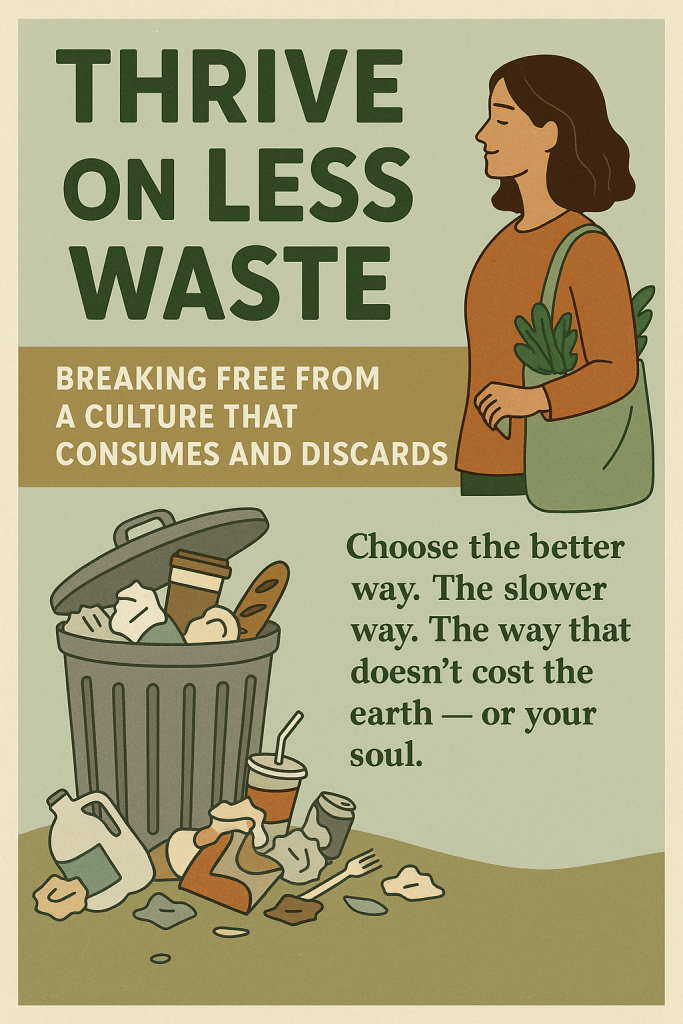
Choose the better way.
The slower way.
The way that doesn’t cost the earth — or your soul.
Thrive on less. Live with purpose. Leave room for what truly matters.
 Thrive on Less
Leave a comment