Tagline: When identity becomes a mask, relationships lose their meaning.
✦ Introduction: The Digital Mirage
In a world where we connect through screens more than through souls, the rise of catfishing is a symptom of a deeper crisis — the loss of authenticity.
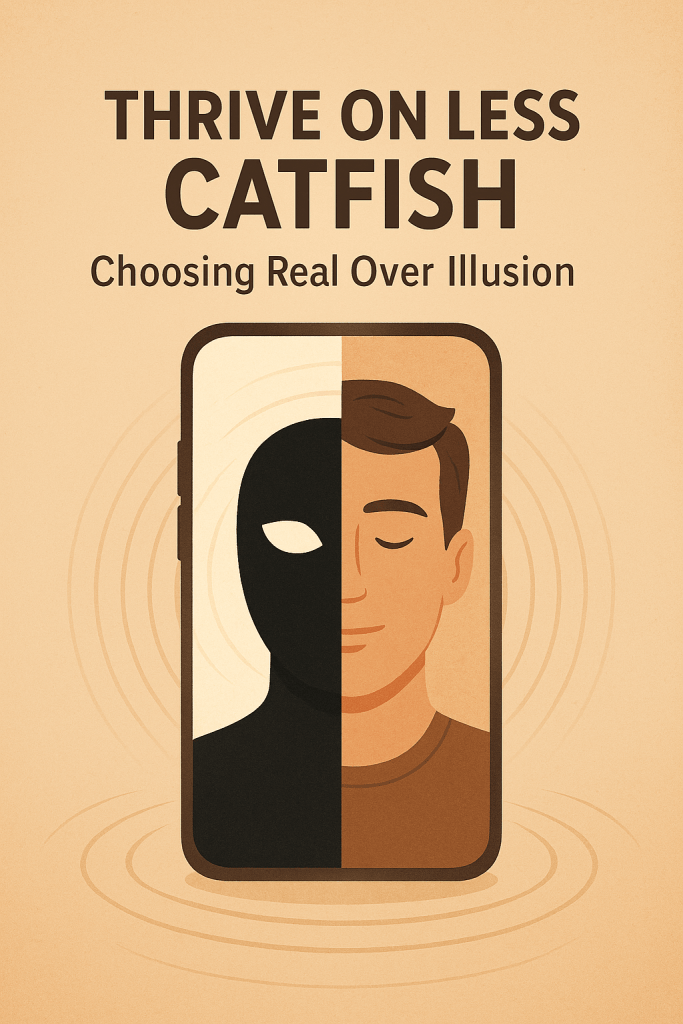
A catfish isn’t just someone using fake pictures online. It’s anyone who:
- Pretends to be someone they’re not
- Hides their true self to manipulate or gain attention
- Lies about intentions to lure people emotionally or romantically
And it’s more common than we think — because many people are afraid that their true self won’t be enough.
✦ The Emotional Cost of Catfishing
Catfishing isn’t harmless. It’s betrayal in disguise. When someone invests trust, emotion, and time in a lie, the damage runs deep:
- Broken trust
- Emotional trauma
- Paranoia in future relationships
- Isolation and shame
You’re not just deceived — you’re devalued. Because the person you trusted never really existed.
✎ Thrive Note: Inauthentic connections destroy the foundation of true love.
✦ Why People Catfish — And Why It’s Dangerous
Catfishing happens for many reasons:
- Insecurity
- Loneliness
- Control
- Revenge
- Fantasy addiction
But behind it all is the fear of being known — and the temptation of power without vulnerability. People build entire personas because they don’t believe they’ll be loved as they are.
But lying for love isn’t love. It’s manipulation.
✦ Thriving Beyond Digital Deception
To thrive on less catfish is to say:
“I would rather be alone and honest than loved under false pretenses.”
It’s a choice to seek:
- Honest conversations over curated illusions
- Emotional safety over digital games
- Real connection over pixelated perfection
✦ 5 Ways to Guard Your Heart Online
✦ 1. Don’t Fall for the Fantasy
If it seems too perfect, it probably is. True connection is messy, human, and slow.
✦ 2. Ask for FaceTime, Not Just Text Time
If they avoid real-time interaction, there’s usually something to hide.
✦ 3. Don’t Ignore Red Flags
Avoiding your gut feeling is how manipulation grows. Listen to your intuition — it’s a spiritual tool.
✦ 4. Know Your Worth
You don’t need to accept half-truths or half-loves. You were made for more than digital deception.
✦ 5. Build Relationships Rooted in Truth
Seek people who are proud of who they are — not actors rehearsing scripts to get attention.
✦ Final Word: Authenticity Is Your Armor
The internet has made pretending easy — and telling the truth rare.
But you can choose differently.
You can show up as yourself, even if it’s scary.
You can demand real connection, even if it’s slower.
You can protect your heart by choosing truth over attention.
Because pretending might get you applause —
But truth is what gives you peace.
To thrive on less catfish is to say:
“I don’t need to lie to be loved. I don’t need to be deceived to feel desired. I choose truth — even when it’s hard.”
→ Reflect & Share:
Have you ever experienced being catfished or deceived online? What did it teach you about truth and trust?


 Thrive on Less
Leave a comment