Tagline: You don’t have to fight to be strong. Real power is quiet, clear—and kind.
Introduction
We live in a world that glorifies violence. It’s in our media, our language, our schools, our justice system—even our homes. We’re told to fight back, strike first, dominate, defend, destroy. But this constant exposure chips away at our humanity.
What if thriving didn’t require aggression?
What if we could rise without rage, and win without war?
In this post, we’ll explore how to Thrive on Less Violence—internally, relationally, and culturally—and how to create more safety, dignity, and peace in our everyday lives.
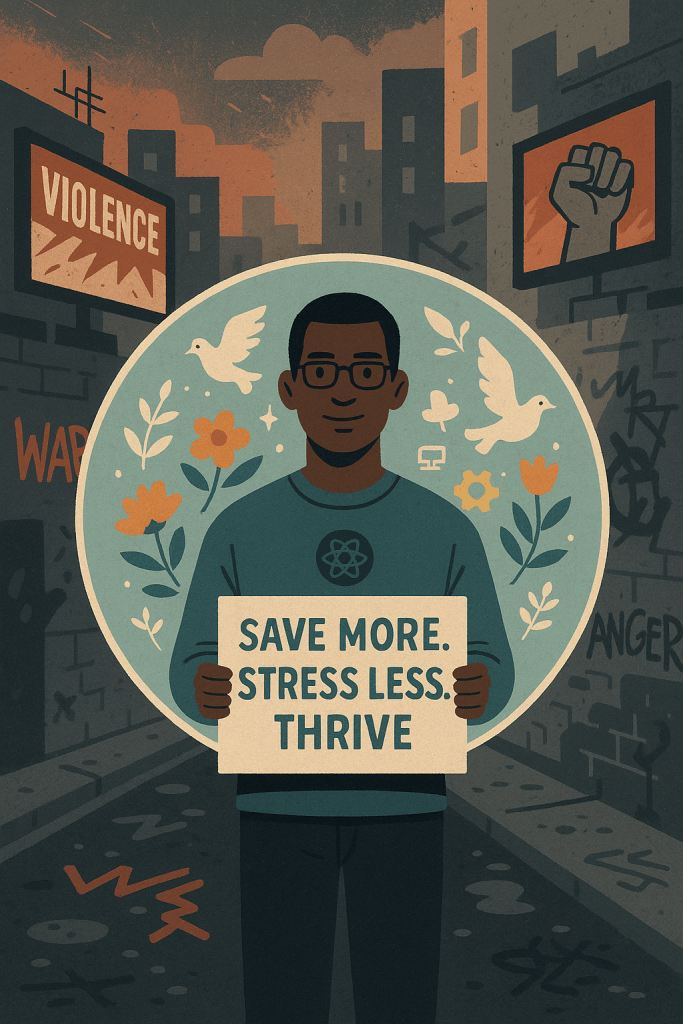
Violence Isn’t Just Physical
When we hear “violence,” we often think of fists, weapons, and warzones. But violence shows up in subtle, normalized ways:
- Cruel words online
- Emotional manipulation in relationships
- Bullying disguised as “tough love”
- Media that celebrates harm over healing
And we internalize it—learning to treat ourselves just as harshly as the world does.
➡️ Violence begins in the heart, long before it reaches the hands.
Step 1: Recognize Internalized Violence
Ask yourself:
- How do I talk to myself when I fail?
- Do I suppress my emotions or shame my own needs?
- Am I quick to anger when I feel small or unseen?
Self-directed violence creates inner chaos that spills outward. The first step toward peace is gentleness—with yourself.
Step 2: Replace Reactivity with Reflection
When you feel triggered:
- Pause. Don’t respond in the heat.
- Breathe. Let the nervous system settle.
- Ask: “What’s really behind this reaction?”
Violence thrives in impulsive moments. Peace lives in the pause.
Step 3: Cultivate a Culture of Nonviolence
In your relationships:
- Speak with respect, even when you disagree
- Set firm, clear boundaries without cruelty
- Model accountability instead of punishment
In your home:
- Limit violent media exposure (especially for kids)
- Normalize emotional expression over suppression
- Practice daily acts of calm connection: meals, music, silence, or prayer
➡️ Peace is not passive. It’s the bold decision to build a safer world from the inside out.
Step 4: Protest with Peace, Not Poison
Resisting injustice doesn’t require hate—it requires strategy and soul.
- Use your voice, your art, your vote
- Support restorative justice and nonviolent movements
- Hold space for pain without becoming pain
Martin Luther King Jr. said, “Darkness cannot drive out darkness; only light can do that.”
Let’s be light-bearers.
Final Thoughts: Peace Is a Daily Practice
Less violence doesn’t mean less strength.
It means more clarity, more courage, and more compassion.
It means choosing not to be hardened by a harsh world—but softened by a wiser one.
To thrive on less violence is not just a lifestyle—it’s a legacy.
✨ Your Turn
Where in your life could you choose peace over power?
Comment below—or share this with someone ready to unlearn the fight and embrace the calm.
Explore More in the Series:
🔹 Thrive on Less Revenge: Reclaiming Power Through Peace
🔹 Thrive on Less Grief: Healing Without Holding On
🔹 Thrive on Less Bad News: Reclaiming Peace in a World of Noise
 Thrive on Less
Leave a comment