In a world flooded with streaming platforms, endless content, viral trends, and 24/7 news cycles, it’s easy to get swept up in the constant flow of entertainment and information. Movies captivate us, social media commands our attention, the media shapes our worldview, and entertainment in all its forms seems inescapable. But what happens when these tools—meant to inform, inspire, and entertain—become instruments of manipulation?
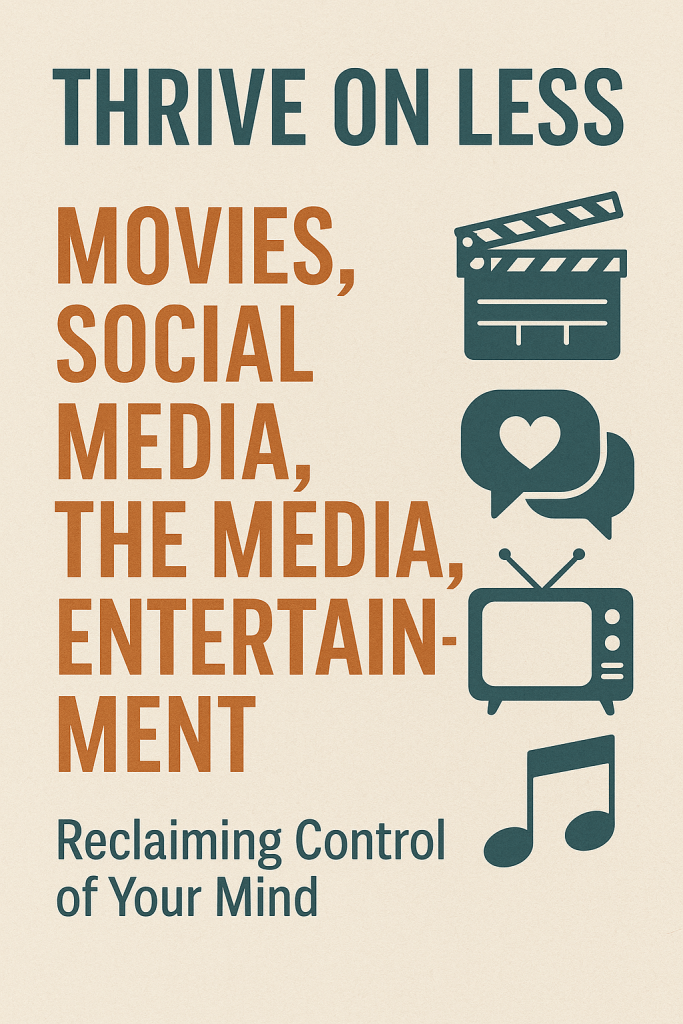
“Thrive on Less” isn’t just about decluttering your home or simplifying your diet. It’s about examining all the things we consume—physically, emotionally, and mentally—and asking whether they serve us or enslave us.
The Invisible Chains of Influence
From a young age, we’re fed narratives about who we should be, what success looks like, and what we should fear or desire. Movies portray idealized lifestyles, relationships, and ambitions. Social media bombards us with highlight reels of other people’s lives, curated to perfection. The media often polarizes us, framing stories to evoke outrage or fear rather than understanding. And entertainment? It rarely gives our brains the rest they desperately need.
We often think we are in control of our choices—but many of those choices have been influenced long before we realize it. Algorithms learn what grabs our attention and feed us more of the same, reinforcing biases and keeping us in emotional loops of comparison, distraction, or fear.
The Cost of Constant Consumption
This digital overload doesn’t come without a price. Constant exposure to manipulated realities impacts our:
- Mental health: Increased anxiety, FOMO (Fear Of Missing Out), and depression are strongly linked to social media overuse.
- Attention span: Studies show that excessive media consumption reduces our ability to focus deeply on meaningful tasks.
- Authenticity: The more we consume others’ lives and opinions, the more we lose touch with our own identity and values.
- Relationships: Time spent glued to screens is time stolen from real, face-to-face connections.
Entertainment as Escapism or Entrapment?
Entertainment can be beautiful. A powerful film can change hearts. A good laugh can heal. But when entertainment becomes a numbing agent—a way to avoid thinking, feeling, or engaging with the real world—it shifts from a tool to a trap. It keeps us passive. Distracted. Tame.
This is how people can be controlled without even realizing it. By keeping us endlessly entertained, overwhelmed, and divided, we become easy to market to, manipulate, and mislead.
Thrive on Less: Reclaiming Your Mind
So how do we break free?
- Consume intentionally: Don’t scroll mindlessly. Set time limits for media and entertainment.
- Detox regularly: Take breaks from social media and streaming services. Reconnect with your thoughts.
- Question narratives: Ask yourself: Who benefits from me believing this story or buying this product?
- Prioritize creation over consumption: Instead of watching another show, write a journal entry. Instead of scrolling, build something real—skills, relationships, dreams.
- Reconnect with reality: Go outside. Talk to people. Volunteer. Engage with life as it is, not through a screen.
Less Is More
You don’t need to become a hermit or destroy your devices. But you can choose to reclaim your attention and mental clarity. You can step out of the noise and into the present.
Thrive on Less Movies, Social Media, Media, and Entertainment doesn’t mean rejecting joy or curiosity. It means refusing to be a passive participant in your own life. It means becoming mindful, intentional, and free.
In a world desperate for your attention, silence is power. Stillness is rebellion. Awareness is freedom.
Ready to reclaim your mind? Let go of the noise. Embrace the truth. Thrive.
 Thrive on Less
Leave a comment