We often speak of mental illness in terms of clinical diagnoses: depression, anxiety, bipolar disorder, PTSD, OCD, eating disorders, and schizophrenia—just to name a few. With over 200 recognized mental health disorders, the world has made great strides in acknowledging the invisible struggles that millions silently endure.
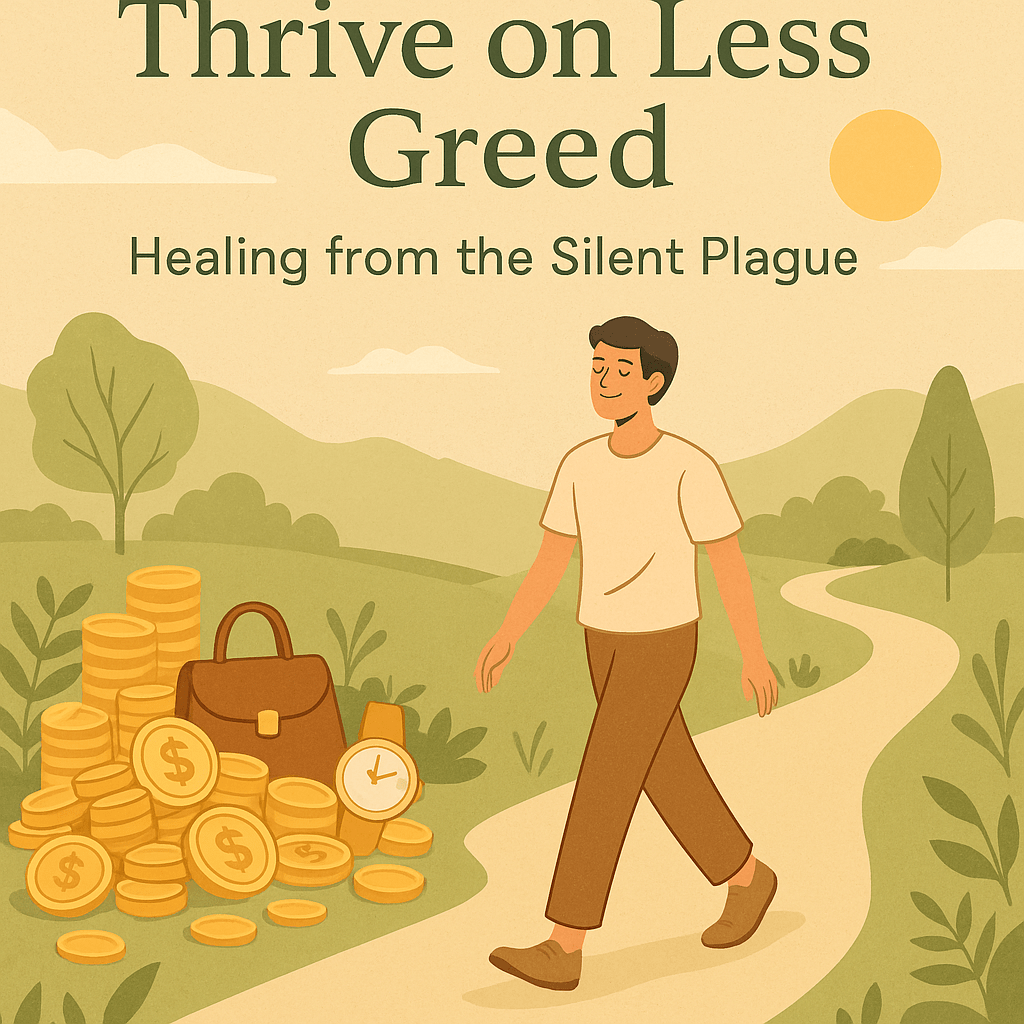
But amidst this rising awareness, there’s one condition that remains largely undiagnosed—one that is arguably more pervasive than any other. It doesn’t come with a prescription. It isn’t often discussed in therapy. And yet, it quietly infects minds, homes, institutions, economies, and even entire nations.
This illness is Greed.
The Most Contagious Mental Disorder?
Greed is not formally listed in the DSM-5, but its symptoms are all around us. Its presence is insidious—woven into our marketing, media, social status systems, and cultural expectations. It’s a form of spiritual and emotional distortion that convinces us that happiness lies in acquiring more: more wealth, more possessions, more power, more validation.
Unlike other disorders, greed doesn’t just affect the individual. It’s contagious. And its consequences are catastrophic:
- Wars waged over resources, power, and land.
- Divorces fueled by financial dissatisfaction or material obsession.
- Poverty and unemployment created by economic systems driven by overconsumption and inequality.
- Obesity and addiction driven by insatiable cravings—whether for food, substances, or stimulation.
- Depression and anxiety worsened by the never-ending comparison to others who seem to “have more.”
Greed masquerades as ambition. It is applauded in corporate boardrooms and glamorized in social media feeds. But it’s a black hole—a gravitational force that draws in all other sins and empties the soul.
Materialism: The False Standard of Success
In today’s society, success is often measured by what we own. The larger the house, the more expensive the car, the trendier the clothes—the more admiration and validation we receive.
But this belief system is a trap.
Greed keeps us running on a treadmill of desire, always chasing the next thing, never satisfied. It tells us we’re never enough—unless we have more. But when is enough, enough?
This toxic pattern leads to burnout, debt, envy, broken relationships, and a distorted sense of identity. It causes us to place our value in what we have instead of who we are.
Greed Destroys What Matters Most
Greed doesn’t just damage economies and ecosystems—it destroys the fabric of our personal lives. It:
- Tears apart families over inheritances and financial stress.
- Breaks friendships with jealousy and competition.
- Exploits workers in the pursuit of profit.
- Pollutes the planet through overproduction and overconsumption.
- Numbs our spirituality by focusing on worldly gain instead of eternal purpose.
And most tragically, it erodes our souls—leaving behind emptiness where meaning once lived.
The Antidote: Simplicity, Gratitude, and Generosity
The path to healing from greed isn’t about giving up everything you have. It’s about shifting your mindset from accumulation to appreciation.
- Simplicity invites you to reclaim joy in what you already have.
- Gratitude reminds you that abundance is not measured by quantity, but by contentment.
- Generosity breaks greed’s hold, replacing fear of scarcity with the joy of giving.
Thrive on less doesn’t mean settling for less. It means choosing less so you can experience more of what truly matters: peace, purpose, presence, and authentic connection.
Choose Wholeness Over Wealth
In a world infected by greed, choosing simplicity is a radical act of healing. It is countercultural. It is courageous. And it is deeply rewarding.
Let’s redefine success—not by how much we own, but by how free we feel.
Let’s thrive on less greed—and watch how much more we can truly live.
 Thrive on Less
Leave a comment